A peaceful app that tells you exactly when to open or close your windows to save energy. Built solo in Phoenix, Arizona. No ads, no subscriptions, no data collection.
WindowWise watches the weather, learns your home, and pings you at the one moment each day when opening a window saves you real money — and again before the heat comes back.
Most homes spend hundreds of dollars a year cooling or heating air that nature would have given them for free. The hard part isn't the strategy — open the windows when it's cool, close them when it's hot. The hard part is remembering, on the right night, at the right hour, before the cold or heat slips away.
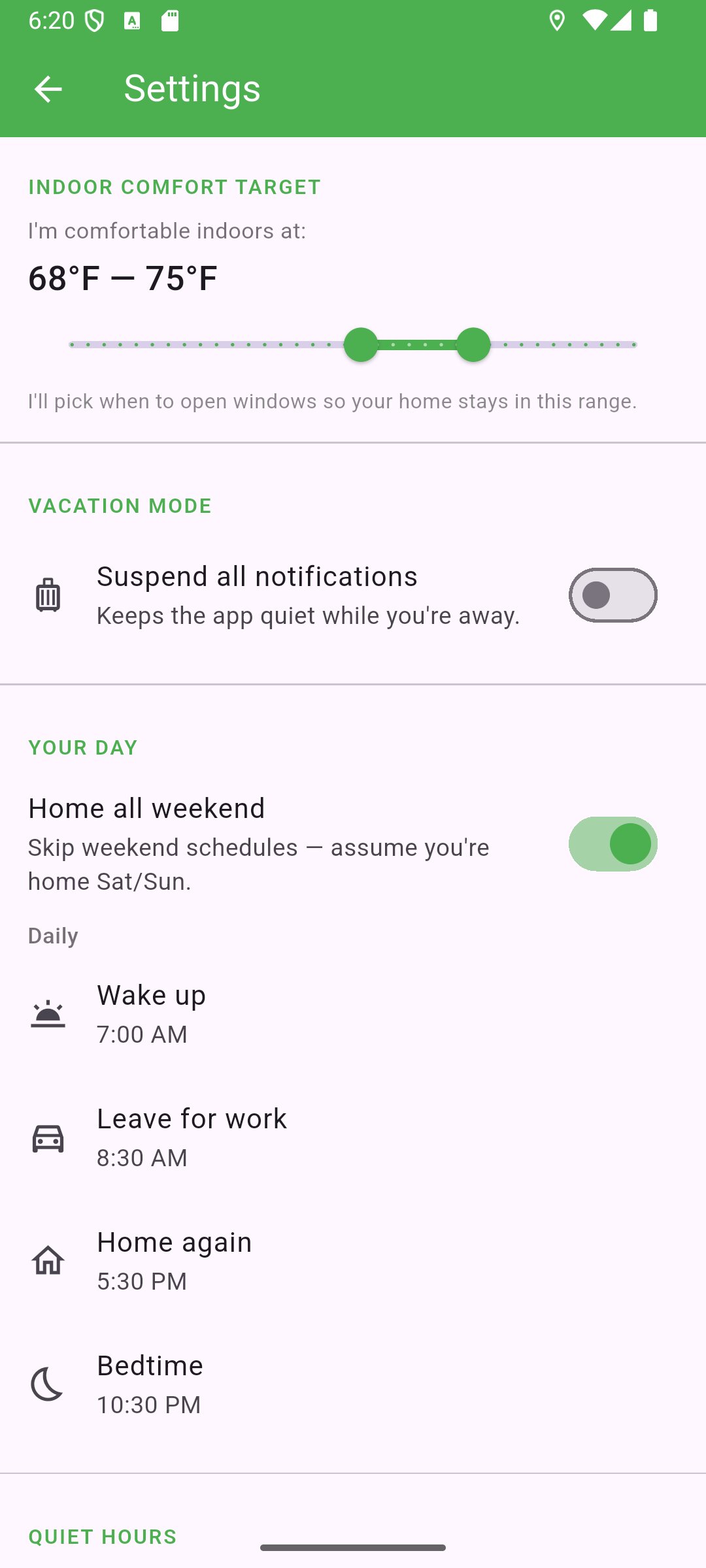
WindowWise does the remembering. It watches the local hourly forecast, the indoor comfort range you set, the outdoor sensors (or paired weather station) at your home, and the shape of your day. When opening a window will bank meaningful cooling overnight or capture warm afternoon sun in winter, it pings you. When the weather is about to leave that window, it pings you to close. The rest of the time, it stays quiet.
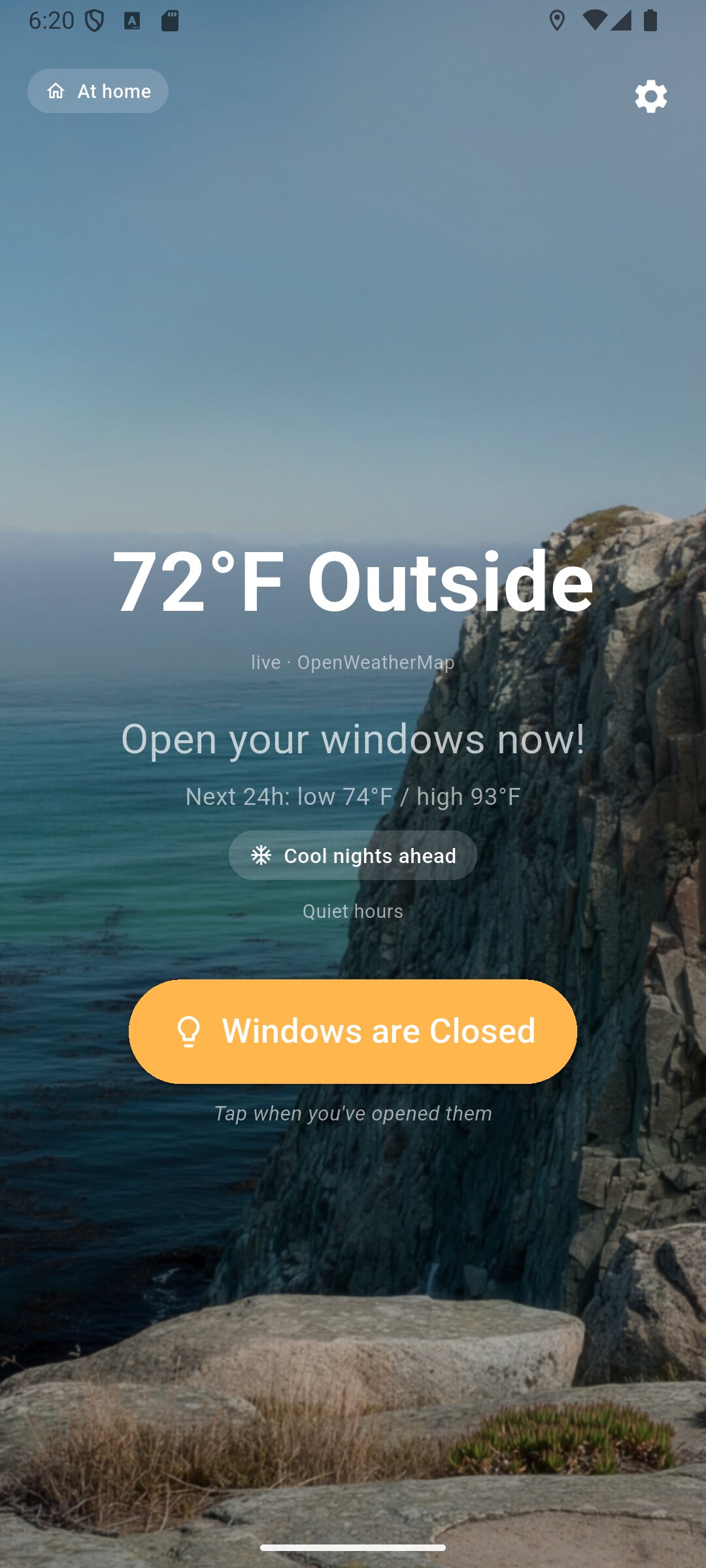
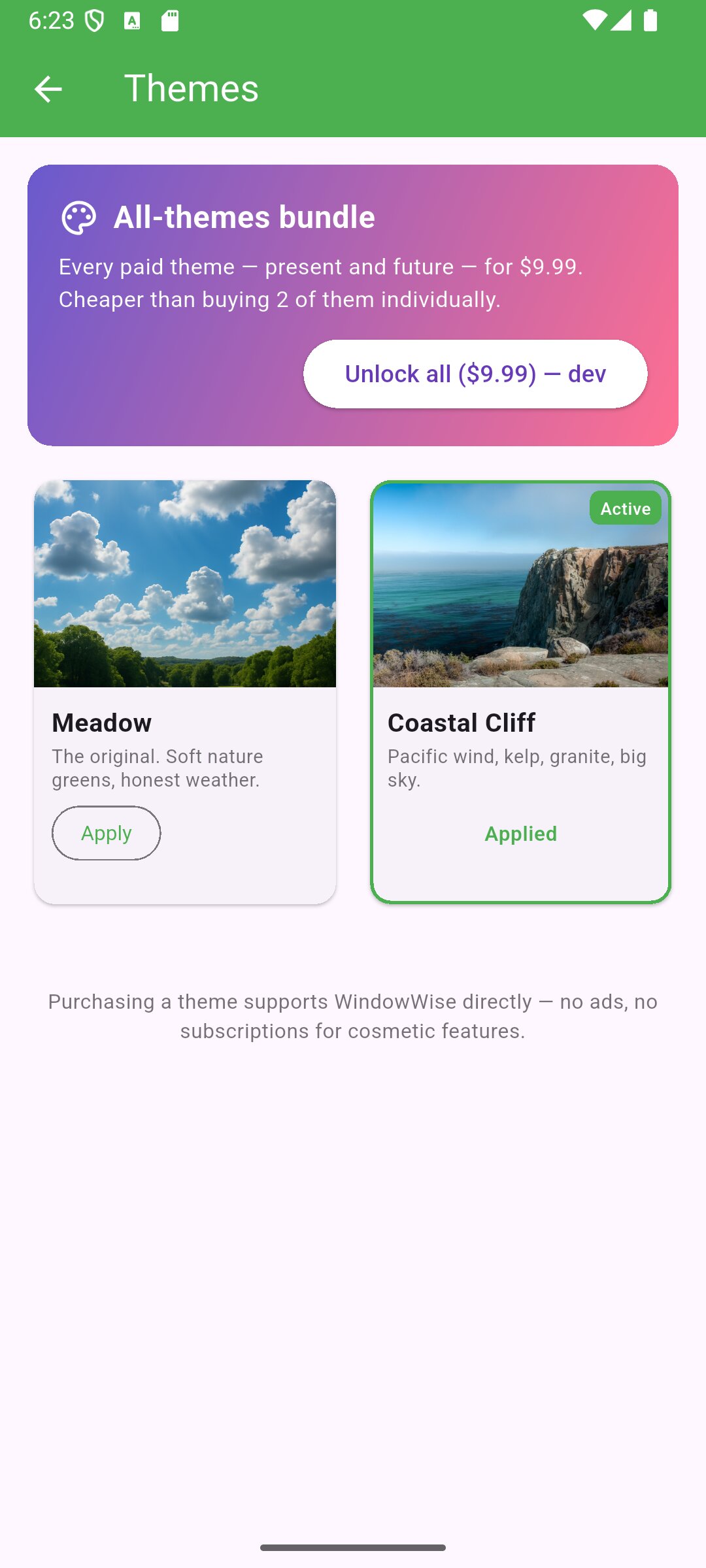
The app is intentionally peaceful. The home screen is a photographic backdrop that shifts with the time of day, the weather, and the season — a meadow at dawn, a coastal cliff at golden hour, snow drifting past a cabin at dusk. One headline number. One plain-English instruction. No banners, no popups, no upsells.
WindowWise is built by David Bowler, a software engineer based in Phoenix, Arizona, working alone on the app in time around his day job and family. The app started from a Phoenix-summer observation: the AC was running at 5am on a 68°F morning, fighting against air the open windows would have given for free, because nobody in the house had remembered to open them at the right time the night before. The first prototype was a Python script that texted him when to open windows. WindowWise is the version of that script that everyone else can use.
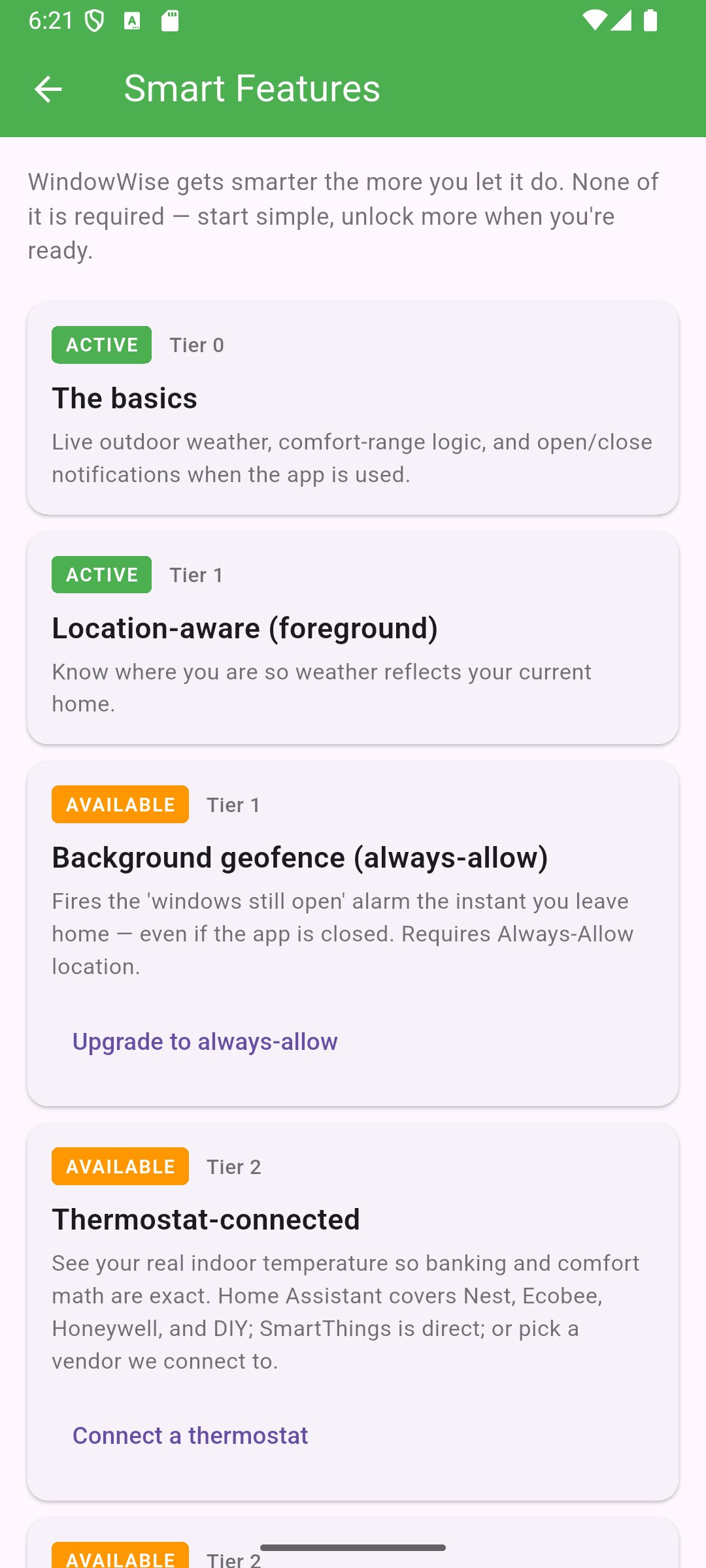
The app is built around a principle David calls "peaceful frontend, smart backend." The home screen looks like a painting; the engine underneath weighs forecasts, diurnal swings, comfort ranges, schedules, quiet hours, vacation modes, and (optionally) thermostat + outdoor sensor readings to make every notification count.
Live captures from an Android build at 1080 × 2400 px (Pixel 6 form factor, q85 JPG). For App Store-spec assets at iPhone 6.7" (1290 × 2796), contact us at [email protected].
Reporters covering one of these story arcs are particularly welcome — happy to chat for 20 minutes on any of them:
A solo developer in Phoenix builds the app he wishes existed, ships it as a side project around a full-time job and three kids, refuses to sell ads, refuses to track users, and competes against Big Weather by being quieter and more useful.
A historical-weather analysis WindowWise ran across 30 cities globally identified Kathmandu, Sana'a, Cusco, and similar high-altitude mid-latitude markets as the strongest fits for the app's value proposition on the planet — stronger than any US city in the corpus. The app's localization roadmap (Hindi / Nepali / Spanish / Persian / Turkish) is built around that finding.
A 2024 reckoning with how relentlessly chatty most weather apps are. WindowWise's design constraint — pings you ONCE when it matters, not five times a day — is a direct counter to the engagement-farm patterns that have eaten the category.
Diurnal-swing apps work when the gap between daytime highs and nighttime lows is meaningful. That gap is narrowing in many places, and disappearing in others, as overnight lows climb faster than daytime highs. The app's marketing-calendar data (open-window opportunity by city by month) is a small public-interest artifact about how cooling habits will need to shift.
Best path: email [email protected]. David handles all press personally; expect a reply within a day or two unless he's deep in a deploy.
For interview requests, please indicate your outlet, timeline, and whether you'd prefer voice / video / async email. For visual assets beyond what's on this page, please describe what you need (screen size, format, number of frames) and we'll either send them or set up a short remote-record session.
 WindowWise